

Intel’s CPU roadmap has more confirmed details right now than at any point in the past five years. Between official announcements, supply-chain reports from DigiTimes, and a steady stream of leaks from hardware sources, a clear sequence of generations has emerged: Panther Lake is already in laptops, Nova Lake is on its way to desktops later in 2026, and the architecture after that runs all the way through 2028 and beyond. Here is what the leaks show, what Intel has confirmed, and what it means if you are buying or building a PC in the next two years.
How reliable are these leaks?
Most of what we know comes from a handful of overlapping sources: supply-chain reports published by DigiTimes, leaker accounts on X (formerly Twitter) such as momomo_us and Haze2K1, and YouTube hardware analysts including Moore’s Law Is Dead and RedGamingTech. None of that is official until Intel says so, but several specific claims from these sources have proven accurate over time, and near-term products tend to be more reliable than anything planned for 2028.
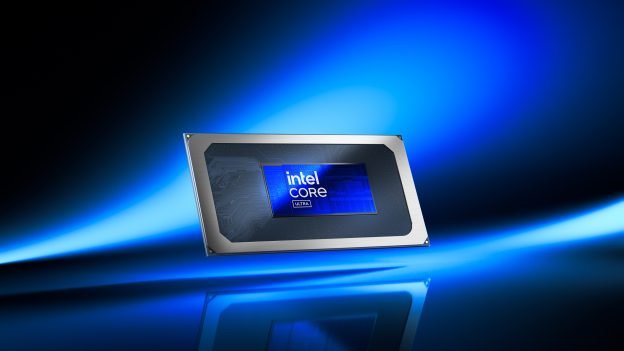
The broad shape of Intel’s roadmap has also been cross-validated: multiple independent leaks have converged on the same codenames, socket names, and rough timelines. When a leaked detail appears across several unconnected sources, confidence goes up significantly. With that framing in place, here is what the picture looks like right now.
Panther Lake (Core Ultra 3): Intel’s 18A launch is already real
Panther Lake launched at CES in January 2026 as the Core Ultra Series 3, making it the first consumer platform built on Intel’s new 18A process node. Intel began shipping engineering samples in late 2025, with broad retail availability starting January 27, 2026, across more than 200 laptop designs from partners including Lenovo, ASUS, and MSI.
The chip uses a multi-tile architecture. The compute tiles, which hold the CPU cores, are built on 18A at Intel’s Fab 52 in Chandler, Arizona. The GPU tile comes in two sizes: the smaller four-core version is made on Intel’s own Intel 3 node, while the larger 12-core version is fabbed by TSMC on N3E. The I/O tile is also TSMC.
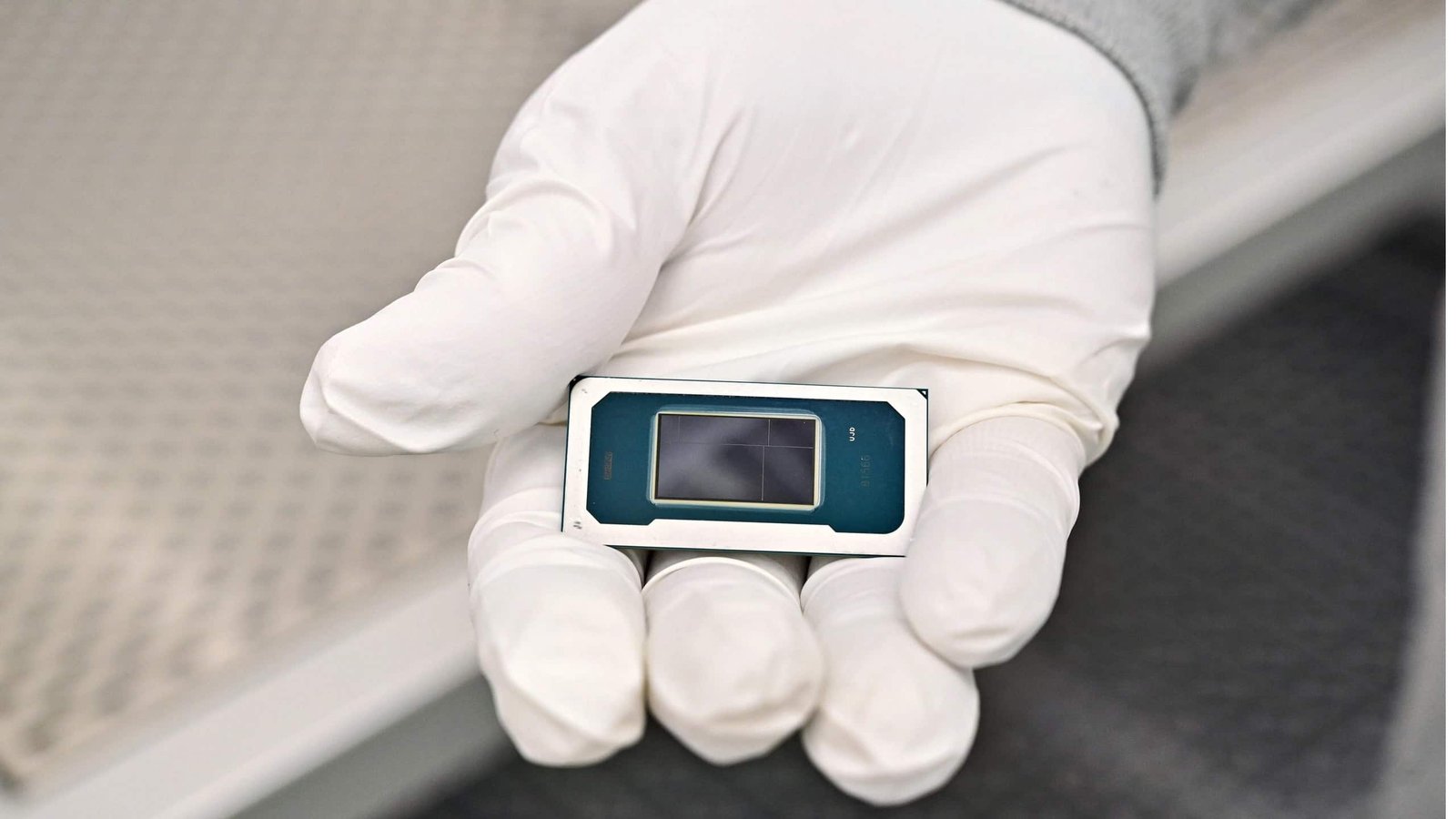
Performance claims from Intel put Panther Lake at more than 50% faster multi-threaded CPU performance compared to the previous generation (Arrow Lake), and a 76% improvement in gaming graphics performance at the same power envelope. The flagship Core Ultra X9 388H features 16 total cores and 12 Xe3 GPU cores, with a 5.1 GHz boost clock. The full lineup spans from the power-sipping Core Ultra 3 322 up to the Core Ultra X9 388H, covering laptops from thin-and-light ultrabooks to performance systems.
Key takeaway: Panther Lake is not a paper launch. It shipped on schedule on Intel’s new 18A node, and the early reception has been positive, especially on graphics and battery life.
Intel’s official Panther Lake product page on the Intel Newsroom has the full architectural breakdown for anyone who wants the primary source.
Nova Lake (Core Ultra 400): the big desktop overhaul
Nova Lake is the part most enthusiasts are waiting for. It will be branded as Intel Core Ultra 400 and is aimed squarely at the desktop performance segment, where Intel has been trailing AMD for the better part of two years. The leaked picture is detailed enough now to cover architecture, socket, cache, and power.
Core architecture and count
Nova Lake uses two new CPU core designs: Coyote Cove P-cores and Arctic Wolf E-cores, plus a new category of low-power E-cores (LPE-cores) on the SoC tile. Leaked specs from VideoCardz and multiple other sources point to a lineup that scales from 8 total cores at the entry level up to 52 cores in the flagship.
The 52-core configuration uses two compute tiles, each carrying 8 P-cores and 16 E-cores, plus 4 LPE-cores in the SoC tile: 16P + 32E + 4LPE. That makes the top-end Nova Lake closer to a workstation part than a traditional mainstream desktop CPU, and it directly addresses the segment Intel abandoned when it retired the X299 HEDT platform years ago.
Leaked IPC estimates put Coyote Cove around 15% faster per clock than Raptor Lake’s P-cores. Clock speeds are unknown until close to launch, so absolute performance comparisons against AMD’s Zen 6 are not possible yet.
The bLLC cache system
The most architecturally interesting feature in Nova Lake is bLLC, which stands for Big Last-Level Cache. It is Intel’s answer to AMD’s 3D V-Cache and works differently: instead of stacking cache vertically on top of a compute die, Intel uses a separate in-package cache chiplet that adds to the total L3 available to the CPU complex.
Four SKUs are expected to carry bLLC. The Core Ultra 9 flagship with two compute tiles is rumored to reach 288 MB of total cache (144 MB per tile), while the Core Ultra 7 single-tile variants are expected to top out at 144 MB. That is a significant amount. AMD’s Ryzen 9 9950X3D2 hits around 192 MB with stacked 3D V-Cache, so Intel’s numbers, if accurate, would be competitive at minimum.
One meaningful difference: Intel’s bLLC can sit on both compute tiles in a dual-tile CPU, giving symmetrical cache access across all cores. AMD’s 3D V-Cache currently mounts on only one CCD, which creates scheduling complexity for the OS when assigning workloads.
Nova Lake desktop lineup at a glance (leaked, unconfirmed)
| Brand | Cores (P+E+LPE) | Tiles | bLLC | TDP range (leaked) |
| Core Ultra 3 | 4P+0E+4LPE (8 total) | 1 | No | 35W |
| Core Ultra 5 | 4P+8E+4LPE (16 total) | 1 | No | 65-125W |
| Core Ultra 7 (bLLC) | 8P+16E+4LPE (28 total) | 1 | 144 MB | 125-150W |
| Core Ultra 9 (bLLC) | 16P+32E+4LPE (52 total) | 2 (dual) | 288 MB | 175W base / up to ~474W PL2 |
All figures are from leaked documents and remain unconfirmed. TDP values reflect Intel’s rated base power; PL2 (peak sustained power) goes considerably higher.
New platform: LGA1954 and 900-series chipsets
Nova Lake requires a new socket, LGA1954, which has 103 more pins than the current LGA1851. The good news is that Intel is claiming cooler compatibility with LGA1700 and LGA1851 hardware, which Noctua has confirmed for its own lineup. Existing aftermarket coolers should carry over.

On the chipset side, leaks describe a 900-series family with five options: Z990, Z970, W980, Q970, and B960. That covers the full range from enthusiast-overclocking boards to workstation platforms to budget mainstream builds. The Z990 will be the overclocker’s choice and is already appearing in early Computex demos from Gigabyte with specs that include six NVMe slots and three PCIe 5.0 M.2 bays.
Memory support tops out at DDR5-8000 with a single DIMM per channel. The dual-tile 52-core SKUs are dual-channel, which means the highest-end parts may become memory-bandwidth-limited in some multi-threaded workloads. Intel is apparently aware of this and is positioning those parts primarily for AI, agentic computing, and heavily parallelized creative work rather than gaming.
Power: the dual-tile numbers are significant
The 52-core dual-tile SKUs come with power figures that will demand serious cooling. Leaked guidance for Z990 boards puts the dual-tile PL2 at around 474W for the 52-core model. For context, the Arrow Lake Core Ultra 9 285K peaks at 250W PL2, and even the record-breaking Raptor Lake i9-14900KS topped out at 350W.
The single-tile bLLC parts look more normal: a 175W base TDP with a PL2 that should be manageable with a high-end air cooler or a 360mm AIO. The dual-tile parts will likely require purpose-built cooling solutions similar to what extreme overclockers use today.
Release timing
Intel confirmed a 2026 target for Nova Lake-S. Engineering samples have been spotted, and early supply-chain reports from as recently as June 2026 suggest a Z990 power specification briefing has reached board partners. That level of partner activity typically precedes a launch by about two to three quarters. A late 2026 announcement at an Intel event, with retail availability following shortly after, fits the current evidence. Some reports mention early 2027 as the more likely retail window if yields need more time to mature.
Razer Lake (2027): Griffin Cove and platform continuity
After Nova Lake, Razer Lake is expected to arrive in Q4 2027 as a full architectural refresh rather than a core-count increase. The key new component is the Griffin Cove P-core, described as a proper ‘tock’ — a new microarchitecture — paired with Golden Eagle E-cores that represent a meaningful refinement over Arctic Wolf.
The single most important detail for buyers: Razer Lake is expected to be pin-compatible with Nova Lake’s LGA1954 socket. That means a Z990 or Z970 board bought for Nova Lake should support Razer Lake without a hardware swap. Intel has reportedly committed to LGA1954 longevity spanning multiple CPU generations through the end of the decade, a strategy that directly mirrors AMD’s long-running AM5 platform approach.
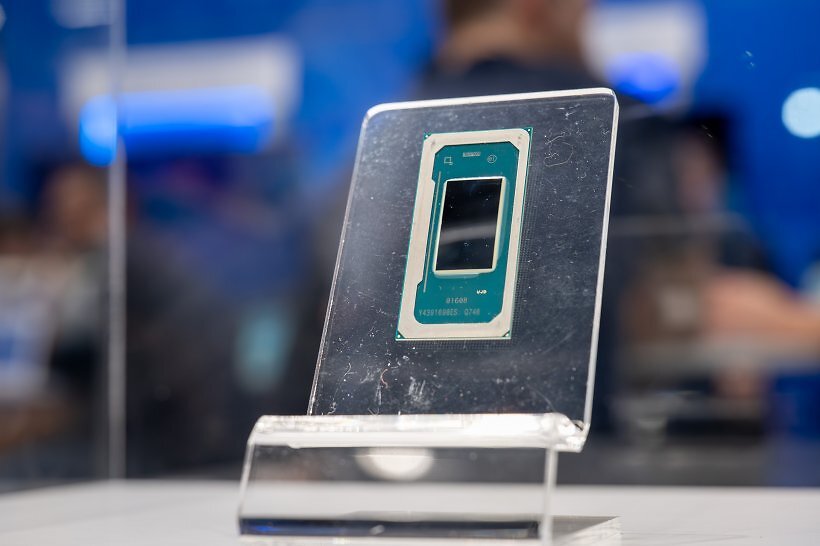
Razer Lake’s core counts are expected to match Nova Lake’s top configurations (up to 16P+32E+4LPE), with the improvement coming through higher IPC rather than more cores. Mid-range and budget Razer Lake SKUs are likely to be re-spun Nova Lake silicon with Razer Lake branding, while the HX mobile and flagship desktop parts get genuine Griffin Cove.
Titan Lake and Hammer Lake: the post-hybrid era
The roadmap gets more speculative past 2027, but the direction is consistent across multiple independent leakers. Titan Lake is planned for 2028 and will be a mobile-only platform. The big architectural story there is a potential move to a unified core design codenamed Copper Shark, which would eliminate the separate P-core and E-core categories. One CPU core type, scaled to different power and clock targets, covering all workloads.
Titan Lake is also where the rumored NVIDIA GPU tile integration shows up. Multiple sources describe a ‘Titan Lake-B’ or ‘Titan Lake-BX’ variant that would pair Intel CPU tiles with an NVIDIA RTX GPU tile in a single package, targeting the same market as AMD’s Strix Halo APU. No official confirmation, but the same claim has appeared in enough independent reports to be taken seriously.
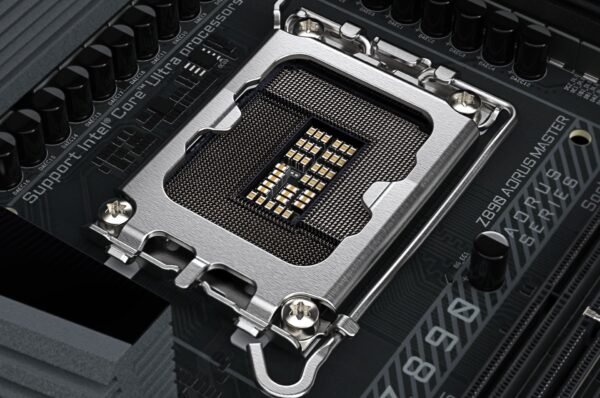
Hammer Lake, reportedly following Titan Lake, is described as bringing a second-generation unified core called Thunder Hawk and, notably, the return of Hyperthreading. Intel dropped simultaneous multithreading starting with Lunar Lake; bringing it back in Hammer Lake would restore full thread counts across the line. The LGA1954 socket is expected to remain compatible through Hammer Lake, extending the platform’s life well into 2029.
The 18A and 14A manufacturing story
All of this hangs on Intel’s process node recovery. Intel 18A combines two new technologies: RibbonFET, a gate-all-around transistor structure that replaces the FinFET design Intel used for over a decade, and PowerVia, which routes power delivery through the back of the wafer to free up front-side routing for signal interconnects. Together, they represent Intel’s most ambitious manufacturing jump since the 14nm era.
18A entered high-volume manufacturing in late 2025. Panther Lake’s successful launch is the clearest signal yet that the node is production-capable. CFO David Zinsner acknowledged yields are still below profitable thresholds but said the company expects to reach target economics by the end of 2026.
Intel 14A, the next node after 18A, uses High-NA EUV equipment, which Intel is the first company to deploy at volume. CEO Lip-Bu Tan has indicated that two external foundry customers are in discussions following early PDK access. Tom’s Hardware’s deep roadmap analysis covers the 14A and foundry picture in detail for anyone following the manufacturing side closely.
What this means if you are buying a CPU
If you are shopping for a laptop right now, Panther Lake systems are available, and the platform is genuinely strong, particularly for battery life and gaming on the go. The Core Ultra X9 models are competitive with AMD’s best mobile chips, and broader availability in the mid-range should improve through the rest of 2026.

For desktop buyers, the calculus depends on timing. If you need a desktop PC now, Arrow Lake Refresh parts are available and get the job done. If you can wait six to twelve months, Nova Lake will be a substantial generational jump, not just in raw core count but in gaming performance through bLLC cache. The 52-core dual-tile SKU is genuinely unprecedented for a mainstream desktop platform and will likely cost accordingly.
If you already own an Arrow Lake system on LGA1851, there is no straightforward path to Nova Lake without a new board. But if you buy a Z990 board for Nova Lake, the current leaks suggest you will be able to upgrade to Razer Lake and potentially further without swapping motherboards, which changes the long-term value equation considerably.
Frequently asked questions
When does Intel Nova Lake come out?
Intel has confirmed a 2026 target for Nova Lake desktop CPUs. Supply-chain activity in mid-2026 is consistent with a late 2026 announcement. Some reports suggest early 2027 is more realistic for broad retail availability, depending on 18A yield progress.
Will Nova Lake need a new motherboard?
Yes. Nova Lake requires the new LGA1954 socket and 900-series chipsets (Z990, Z970, W980, Q970, B960). Existing LGA1851 Arrow Lake boards will not support it. However, existing coolers compatible with LGA1700 and LGA1851 are expected to carry over.
What is Intel bLLC, and how does it compare to AMD 3D V-Cache?
bLLC (Big Last-Level Cache) is Intel’s cache-expansion technology for Nova Lake, using a separate in-package cache chiplet. Top SKUs are expected to reach 288 MB total. AMD’s 3D V-Cache stacks cache vertically on a compute die; Intel’s approach is different but aims at the same goal of dramatically reducing cache misses in gaming and data-heavy workloads.
Is Panther Lake worth buying now?
For laptop buyers, yes. Panther Lake (Core Ultra 3) launched in January 2026 with strong battery life, improved gaming graphics from the Xe3 GPU, and a 50%-plus CPU performance improvement over Arrow Lake mobile. It is a genuine upgrade over Lunar Lake for users who need both performance and efficiency.
Will Intel Razer Lake work in Nova Lake motherboards?
Leaked roadmaps indicate Razer Lake is designed for the same LGA1954 socket as Nova Lake. If accurate, Z990 and Z970 boards bought today for Nova Lake would support Razer Lake as a drop-in upgrade in late 2027, similar to how AMD has handled upgrades on AM5.
Conclusion
Intel’s CPU roadmap is the most coherent and densely sourced it has been in years. Panther Lake arrived on Intel’s new 18A node in January 2026 and proved the process works. Nova Lake is on track for late 2026 with up to 52 cores, a 288 MB cache option, a new LGA1954 platform, and DDR5-8000 memory support. Razer Lake follows in 2027 on the same socket with new Griffin Cove cores, and Titan Lake takes the architecture toward a unified core design in 2028.
Recommended Articles :
AMD Zen 6 CPU Leak Details: Everything We Know So Far About AMD’s Next-Generation Ryzen Processors
8 Core CPU vs 10 Core CPU – Which One Should You Buy in 2026?
Endpoint Protection Service High CPU: Causes, Fixes, and Ways to Reduce Resource Usage
What Are Some Heavy CPU Intense Games? Top PC Games That Push Your Processor to the Limit
Why Is My Clock Speed So High, CPU? Causes, Fixes, and When You Should Worry