

Which Hardware Component Interprets and Carries Out Instructions?

The CPU (central processing unit) is the hardware component that interprets and carries out instructions. It is also called the processor, or the microprocessor when it sits on a single chip. Whatever name you use, it is the part that reads each…
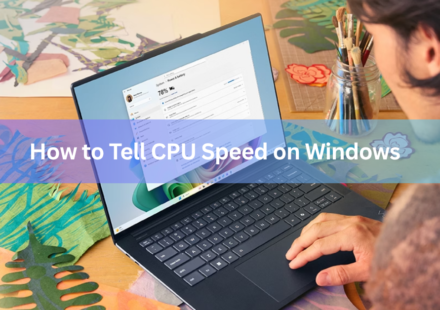
How to Tell CPU Speed on Windows, Mac, and Linux (and What the Numbers Mean)
To tell your CPU speed on Windows, press Ctrl + Shift + Esc to open Task Manager, click Performance, then CPU. You will see two numbers in GHz: the live “Speed” and the “Base speed.” On an Intel Mac, open the Apple menu and choose…
What Temperature Should Your CPU Be When Gaming?
A CPU running between 60°C and 80°C during a gaming session is normal and safe. Short spikes into the mid-80s while you’re loading into a match or running a cutscene aren’t a concern either. The number to watch is a sustained reading…
Is 80°C Hot for a CPU? When It’s Normal and When to Worry
80°C is warm for a CPU, but it isn’t too hot when the chip is working hard. Current Intel and AMD processors don’t start slowing themselves down until they reach their limit, which sits between 89°C and 110°C depending on the model. That…

The Best CPUs With Integrated Graphics Right Now
The AMD Ryzen 7 8700G is the best CPU with integrated graphics for a desktop PC you can actually buy today, thanks to its Radeon 780M GPU. If you’re shopping for a laptop instead, the AMD Ryzen AI Max+ 395 (Strix Halo) and Intel’s Panther…
AMD vs Intel for Gaming: Which CPU Should You Actually Buy?
AMD is the better choice for pure gaming performance in 2026. Its Ryzen X3D processors, built around a stack of extra cache memory, run games faster and more consistently than anything Intel currently sells at the same price. Intel still earns its keep…
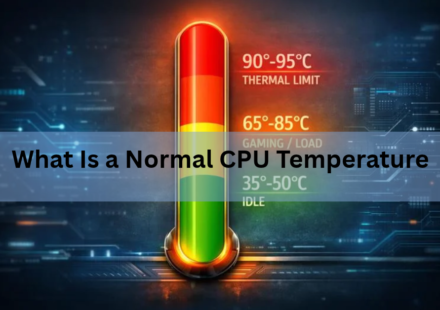
What Is a Normal CPU Temperature? Idle, Gaming, and Load Ranges
A normal CPU temperature is about 30 to 50°C (86 to 122°F) when the computer is idle, and 65 to 85°C (149 to 185°F) when it’s under load, such as gaming, rendering video, or compiling code. Short spikes toward 90 to 100°C during heavy work are also…

How to Check How Much Voltage Your Computer Is Using
Your computer doesn’t use up voltage. It runs on a few fixed voltages, mainly 12V, 5V and 3.3V inside the case, and what actually changes with load is the current, which is what turns into watts. So this check splits in two. To see the voltages,…

What Performance Specification Does 2 GHz Refer To?
2 GHz refers to processor clock speed, also called clock rate or frequency. It means the clock inside the processor ticks 2 billion times every second, and each tick moves the chip one step further through its work. That number describes the CPU and…
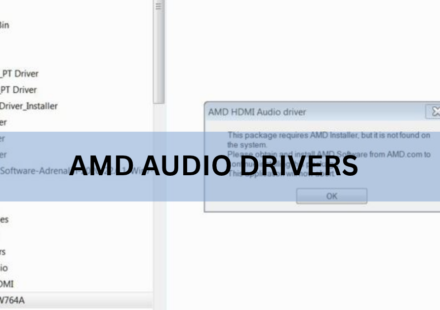
AMD Audio Drivers: What They Are and How to Install Them
AMD audio drivers control the sound your PC sends through an HDMI or DisplayPort cable to a monitor, TV, or receiver. On Windows this shows up as the AMD High Definition Audio Device, and its driver comes bundled inside the AMD Software: Adrenalin…